
How to Advertise a Handyman Business (2026): What Actually Works
Which handyman advertising actually pays off? Real costs for Google Local Service Ads, Facebook ads, flyers, and truck wraps — plus what to do first on any budget.

Quick answer: Before paying for any handyman advertising, max out the free channels — a Google Business Profile, directory listings, and referrals — because they deliver the lowest cost per job. When you're ready to pay, the best first option for most handymen is Google Local Service Ads (the "Google Guaranteed" ads): pay-per-lead at roughly $15–$50 per lead, requiring a background check, license, and general liability insurance. Add Facebook/Instagram ads ($5–$10/day) for awareness and seasonal offers, and a truck wrap ($50–$150 for magnets, up to $5,000 for a full wrap) as a one-time billboard. Rule of thumb: spend 5–10% of revenue once established, and only scale ads that produce a profitable cost-per-booked-job.
Most handyman advertising advice is a list of 20 channels with no guidance on which ones actually make money. This guide is different: it tells you what to do first, what to pay for, and how much — based on what works for a solo handyman, not a 50-truck franchise.
The hard truth up front, straight from handymen who've burned cash on ads: paid advertising stops the moment you stop paying for it. Your free foundation keeps working for years. So the order matters — free first, paid second, scale only what's profitable.
Step Zero: Max Out Free Before You Pay a Dime
Every dollar of advertising works better when your free foundation is already in place. Skipping this step is the #1 way handymen waste ad money.
- A Google Business Profile — the free listing that puts you on the map for "handyman near me." This is non-negotiable and comes before any paid ad. We wrote the full setup guide: Google Business Profile for handymen.
- A shareable online profile — when an ad makes someone curious, they Google you. Give them something professional to land on. You don't need a full website for this; a free HandymanCan profile gives you
handymancan.org/yournamewith your services, photos, rates, and reviews in one link. - Free directories — Yelp, Nextdoor, Bing Places, your local chamber. Claim them; keep your name, phone, and service area identical everywhere.
- Referrals and reviews — the cheapest "advertising" there is. Here's how to get more reviews without being pushy.
Only when these are running should you spend on ads. For the complete free-vs-paid breakdown across all channels, see our pillar guide: how to find handyman jobs.
Paid Channel #1: Google Local Service Ads (Start Here)
Google Local Service Ads (LSAs) are the ads that appear at the very top of Google search results — above the regular text ads and above the Map Pack — with a green "Google Guaranteed" checkmark. For a handyman, this is usually the highest-ROI paid channel, for three reasons: they're pay-per-lead (not pay-per-click), they reach people actively searching, and the badge builds instant trust.
What it costs: You pay per lead, and lead prices typically run $15–$50 depending on your market. You only pay when a customer actually calls or messages you — not for every click.
What you need to qualify: Google screens every business before showing these ads. To pass, you'll need:
- A background check (business owner, sometimes employees)
- A valid business license for your area
- Proof of general liability insurance
(If you don't have insurance yet, start with our handyman insurance guide — general liability runs about $40–$80/month and is required here anyway.)
The Google Guaranteed badge is the real prize. It tells homeowners Google has screened you, and it comes with a money-back guarantee for the customer of up to $2,000 if they're unhappy with the work. That trust signal is why LSAs often convert better than regular ads.
| Detail | Google Local Service Ads |
|---|---|
| Pricing model | Pay per lead |
| Typical cost per lead | $15–$50 |
| You pay when | A customer calls or messages |
| Requirements | Background check + license + liability insurance |
| Trust signal | "Google Guaranteed" badge + up to $2,000 customer guarantee |
| Best for | Any insured handyman who wants steady, high-intent leads |
Pro tip: Respond to every LSA lead fast. Google factors your responsiveness and your review rating into how often it shows your ad — so your ad performance is only as strong as your reputation. Before you pay for a single lead, get your Google Business Profile ranking and start collecting reviews; the same reviews that win you free Map Pack leads also lower what you pay per LSA lead. A free HandymanCan profile gives you one shareable link to gather those reviews and show off your work — the foundation every paid ad points back to.
Your skills deserve to be seen.
Join handymen who use HandymanCan to get found by local clients — completely free.
No credit card. No catch. Takes 5 minutes.
Paid Channel #2: Facebook & Instagram Ads (Awareness, Not Instant Jobs)
Meta ads (Facebook + Instagram) are the most misunderstood handyman advertising channel. Handymen expect them to deliver booked jobs the way Google does — and then feel burned when they don't.
The difference: Google ads reach people searching for a handyman right now. Facebook ads reach people scrolling who don't need one yet. That makes Meta ads good for a different job — staying top-of-mind, promoting seasonal offers, and retargeting people who already visited your profile.
How to run them without wasting money:
- Start tiny — $5–$10/day. You're testing, not scaling.
- Target your service area — lock targeting to the ZIP codes you actually drive to. A handyman ad shown statewide is money lit on fire.
- Lead with before/after photos — your work is the ad. A clean drywall patch or a refinished deck stops the scroll better than a logo.
- Seasonal offers convert best — "Gutter cleaning before the rains" in fall, "Fence repair season" in spring. Match the ad to what people are about to need.
- Retarget — show ads to people who already clicked your profile or visited your page. They're warmer than cold strangers.
Whatever the ad promises, it has to land somewhere that closes the deal. Point every Facebook and Instagram ad at your HandymanCan profile — those before/after photos, your services, and your reviews live in one link, so a curious scroller becomes a booked job instead of a dead click.
| Detail | Facebook / Instagram Ads |
|---|---|
| Pricing model | Pay per click / impression |
| Suggested starting budget | $5–$10/day |
| Best use | Awareness, seasonal offers, retargeting |
| Worst use | Expecting instant booked jobs |
| Creative that works | Before/after job photos |
Paid Channel #3: Offline Advertising That Still Works
Old-school advertising is underrated — because most of your competitors quit doing it.
Truck Wrap or Magnetic Signs
Your vehicle is a billboard you already drive past thousands of people. This is the best long-term value in handyman advertising: pay once, advertise for years.
| Option | Cost | Lasts |
|---|---|---|
| Magnetic door signs (pair) | $50–$150 | 2–3 years |
| Partial wrap (doors + tailgate) | $500–$1,500 | 5–7 years |
| Full wrap | $2,000–$5,000 | 5–7 years |
Keep it readable from 30 feet: business name, phone number, one line of services, and your profile URL. Don't cram it — a short link like handymancan.org/yourname is easy to read and sends drivers straight to your work and reviews.
Flyers and Door Hangers
Still effective for targeting specific neighborhoods — especially homes 15–30 years old that need more maintenance. A batch of 500 door hangers costs about $50–$80 to print. Include one specific offer ("$25 off your first visit"), a QR code to your profile, and distribute Saturday mornings when people are thinking about house projects.
Yard Signs at Job Sites
After a visible job (a new fence, exterior paint), ask the customer if you can leave a small yard sign for a week. Neighbors notice work happening on their street — it's social proof plus advertising for the cost of a $10 sign.
How Much Should a Handyman Actually Spend?
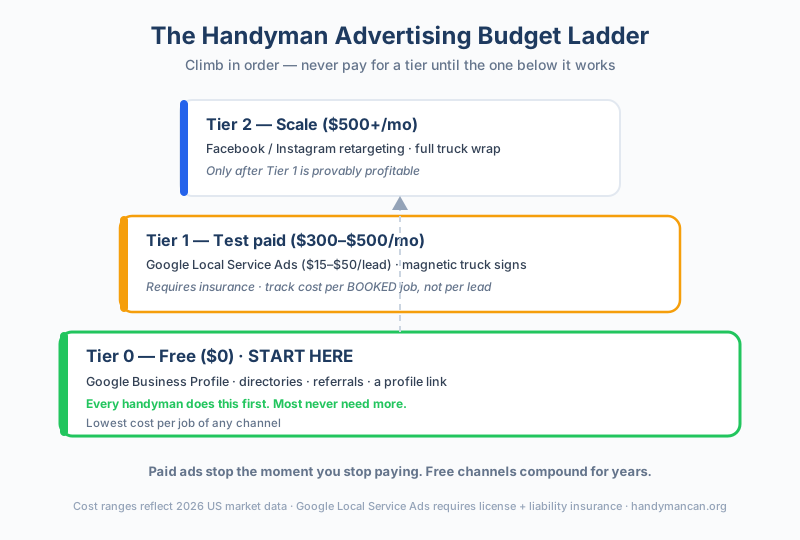
Climb the ladder in order. Never pay for the next tier until the one below it is fully working.
There's no single right number, but here's a framework that keeps you profitable:
- Tier 0 — Free ($0): Google Business Profile, directories, referrals, a profile link. Every handyman does this first. Most never need more.
- Tier 1 — Test paid ($300–$500/month): Once you're insured and have reviews, turn on Google Local Service Ads and add magnetic truck signs. Track your cost per booked job, not cost per lead.
- Tier 2 — Scale ($500+/month): Only after Tier 1 is provably profitable. Add Facebook/Instagram retargeting and consider a full truck wrap.
The benchmark most service businesses use is 5–10% of revenue on marketing once established — but that's a ceiling, not a starting point. Spend $0 until free is maxed, then add paid one channel at a time and kill anything that doesn't pay for itself.
The One Number That Matters: Cost Per Booked Job
Every ad platform will show you "cost per lead." Ignore it. The number that decides whether an ad is worth it is cost per booked job — what you actually paid in advertising to win one paying customer.
If Local Service Ads cost you $30/lead and one in three leads books, your cost per job is $90. If that job is worth $400, that's a great trade. If it's worth $120, it's a wash. Track this for 30 days on any paid channel before you scale it — it's the difference between advertising that builds your business and advertising that quietly drains it.
Set up your free foundation this week, get insured, then test one paid channel with a tracked budget. That's how handymen advertise without wasting money — and it starts with a profile homeowners can actually find. Create your free HandymanCan profile to give every ad somewhere professional to land.
Sources
- Google Local Services Ads — Official page on how LSAs and Google screening work
- Google: Tips to improve your local ranking — Google's guidance underpinning the free-foundation strategy
- BrightLocal — Local Consumer Review Survey 2026 — Data on how trust signals and reviews influence local hiring
- ServiceTitan — How to advertise a handyman business — Industry overview of handyman advertising channels
Ad costs and Google Local Service Ads requirements reflect publicly available information as of June 2026 and vary by market. Lead prices, budgets, and program terms are subject to change.
Frequently Asked Questions
What is the best way to advertise a handyman business?
Start with the free foundation — a Google Business Profile and a shareable online profile — because that's where steady, no-cost leads come from. Once that's running, the highest-ROI paid option for most handymen is Google Local Service Ads (the 'Google Guaranteed' ads at the top of search), where you pay per lead, typically $15–$50, and only for real customer contacts.
How much should a handyman spend on advertising?
A common rule is 5–10% of revenue once you're established, but new handymen should spend $0 until their free channels (Google Business Profile, Nextdoor, referrals) are maxed out. When you do start paying, begin with a small Local Service Ads budget ($300–$500/month), track your cost per booked job, and only scale what's profitable.
Are Google Local Service Ads worth it for handymen?
For most handymen, yes — they're pay-per-lead (about $15–$50 per lead), they appear above the regular ads and the map, and the 'Google Guaranteed' badge builds instant trust. You need to pass a background check and show a business license and general liability insurance to qualify. They work best once you also have a Google Business Profile with reviews.
Do Facebook ads work for a handyman business?
They can, but they're harder than they look. Facebook and Instagram ads reach people who aren't actively searching for a handyman, so they work best for brand awareness, seasonal offers, and retargeting — not instant booked jobs. Budget $5–$10/day, target your service-area ZIP codes, and lead with before/after photos.
How can I advertise my handyman business for free?
Set up a Google Business Profile, claim free directory listings (Yelp, Nextdoor, Bing Places), post before/after photos in local Facebook groups, build a referral program, and put your profile link on your truck and business cards. These free methods consistently out-earn paid ads on a cost-per-job basis.
Your skills deserve to be seen.
Join handymen who use HandymanCan to get found by local clients — completely free.
No credit card. No catch. Takes 5 minutes.
Related Articles
Best Handyman Apps (2026): To Find Work and Run Your Business
The best handyman apps split into two jobs: apps to find work and apps to run your business. See top picks, real prices and lead fees, and the free foundation to start with.

Do You Need a Website as a Handyman? An Honest Answer (2026)
Do you need a website as a handyman? Short answer: you need to be found, not a $3,000 site. Here's what a website really costs, when it's worth it, and what to do instead.
How to Get Your Handyman Business Recommended by ChatGPT & AI (2026)
45% of consumers now use AI tools like ChatGPT to find local businesses. Here's how handymen get recommended by ChatGPT, Google AI, and Gemini — built on the same reviews and findable-page signals that win local search.