
Handyman Insurance Cost (2026): $40–$80/mo + What You Need
Handyman insurance costs $40–$80/mo for $1M general liability. See what coverage you actually need, real 2026 prices, and how being insured wins more jobs. Updated June 2026.

Quick answer: Most solo handymen pay $40–$80/month ($480–$960/year) for $1M general liability insurance — the one policy almost everyone needs. Add workers' comp ($45–$100/mo) if you hire helpers and commercial auto ($100–$200/mo) if you drive for work. You can buy general liability online in under 10 minutes from Next Insurance, Thimble, or Simply Business, with same-day coverage.
One accident without insurance can cost you your business. A customer trips over your tool bag — $15,000 medical bill. You accidentally damage a client's hardwood floor — $8,000 repair. A pipe bursts after your plumbing work — $20,000 water damage claim.
General liability insurance covers all of that for about $40-$80/month. Here's exactly what you need, what it costs, and how to get it.
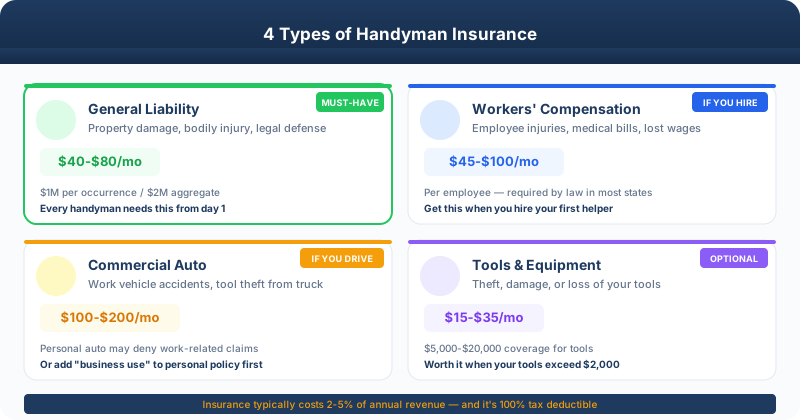
The 4 types of handyman insurance. Most solo handymen only need general liability to start.
Do You Actually Need Handyman Insurance?
Short answer: Yes — even if your state doesn't legally require it.
Here's why:
- One claim can bankrupt you. Without insurance, you're personally liable for every accident. A single property damage or injury claim can cost $5,000-$50,000+.
- Clients require it. Property management companies, commercial clients, and many homeowners won't hire an uninsured handyman. Being insured is a competitive advantage.
- Platforms require it. Thumbtack, Angi, and Google Local Service Ads all require proof of insurance to use their platforms.
- It's surprisingly cheap. At $40-$80/month, insurance costs less than one ruined job.
The real question isn't "do I need it?" — it's "can I afford not to have it?"
When it's okay to wait (and when it isn't)
Plenty of handymen do their first few side jobs before buying a policy — small favors for friends and neighbors, low-risk work like furniture assembly or hanging shelves. If that's you and you've got a financial cushion, waiting a few weeks while you figure out the business won't ruin you.
But there's a hard line. Buy coverage before any of these happen:
- You take a job for someone who isn't a friend or family member
- A client, property manager, or platform asks for a Certificate of Insurance (COI)
- You start any work that touches water, electrical, or anything structural
- You're earning regular income from handyman work
Here's a simple gut check most experienced handymen use: if a single bad day on a job could cost more than you have in the bank, you need insurance today. At $40–$80/month — about $1–$2 for every hour you bill — general liability is the cheapest peace of mind in this trade. Most pros who've been doing this a decade will tell you the same thing: the policy felt optional right up until the day it wasn't.
The 4 Types of Handyman Insurance You Should Know
Not all coverage is created equal. Here's what each type covers, what it costs, and whether you need it.
1. General Liability Insurance (Must-Have)
This is the one policy every handyman needs from day one. It covers:
- Property damage — You accidentally scratch a client's granite countertop, crack a tile, or damage a wall.
- Bodily injury — A client trips over your equipment, or a shelf you installed falls and injures someone.
- Completed operations — Something you installed breaks or causes damage after you've left.
- Legal defense — If someone sues you, insurance covers attorney fees and court costs even if the claim is baseless.
| Detail | Info |
|---|---|
| Typical coverage | $1M per occurrence / $2M aggregate |
| Cost for solo handyman | $40-$80/month ($480-$960/year) |
| Cost with 1-3 employees | $80-$200/month |
| Deductible | $500-$1,000 typical |
| You need this if... | You do any handyman work. Period. |
Costs are averages for solo US handymen in 2026. Your rate depends on location, services offered, and claims history.
2. Workers' Compensation Insurance (If You Hire Anyone)
Workers' comp covers medical bills and lost wages if an employee gets injured on the job. It's required by law in almost every state once you hire your first employee.
| Detail | Info |
|---|---|
| Cost | $45-$100/month per employee |
| Covers | Employee injuries, medical bills, lost wages |
| Required? | Yes — in most states, as soon as you hire 1 employee |
| You need this if... | You hire employees or subcontractors |
Watch out: Some states require workers' comp even for subcontractors you hire, not just W-2 employees. Check your state's rules. If you're caught without it, penalties can include fines of $1,000+/day and even criminal charges.
3. Commercial Auto Insurance (If You Drive for Work)
Your personal auto policy likely has an exclusion for "business use." If you're in an accident while driving to a job site, your personal insurance may deny the claim.
| Detail | Info |
|---|---|
| Cost | $100-$200/month |
| Covers | Accidents while driving for work, tool theft from vehicle |
| Required? | Yes — if you use your vehicle for business |
| You need this if... | You drive to job sites (that's every handyman) |
Pro tip: If you're just starting out and can't afford commercial auto yet, call your personal auto insurer and add a "business use" endorsement. It's cheaper than a full commercial policy and closes the coverage gap.
4. Tools & Equipment Insurance / Inland Marine (Optional but Smart)
Covers your tools if they're stolen, damaged, or lost — whether they're in your truck, at a job site, or in your garage.
| Detail | Info |
|---|---|
| Cost | $15-$35/month |
| Covers | Theft, damage, loss of tools and equipment |
| Typical coverage | $5,000-$20,000 |
| You need this if... | Your tools are worth $2,000+ and you'd struggle to replace them |
Most general liability policies do NOT cover tool theft. If someone breaks into your truck and steals $3,000 worth of tools, you're out of pocket unless you have this coverage.
How Much Does Handyman Insurance Really Cost?
Here's a realistic breakdown for different business stages:
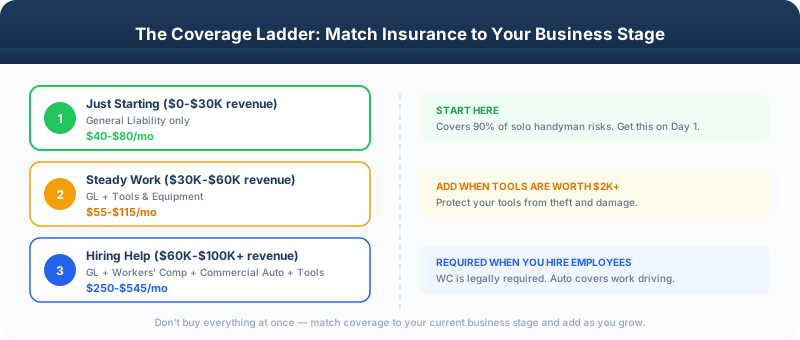
Insurance costs grow with your business. Start with general liability and add coverage as you grow.
Solo Handyman (No Employees)
| Coverage | Monthly Cost | Annual Cost |
|---|---|---|
| General liability ($1M/$2M) | $40-$80 | $480-$960 |
| Tools & equipment (optional) | $15-$35 | $180-$420 |
| Total | $55-$115 | $660-$1,380 |
Growing Business (1-3 Employees)
| Coverage | Monthly Cost | Annual Cost |
|---|---|---|
| General liability | $80-$200 | $960-$2,400 |
| Workers' comp (per employee) | $45-$100 | $540-$1,200 |
| Commercial auto | $100-$200 | $1,200-$2,400 |
| Tools & equipment | $25-$45 | $300-$540 |
| Total | $250-$545 | $3,000-$6,540 |
What Affects Your Rate?
Your actual premium depends on:
- Location — California, New York, and Florida are typically more expensive
- Services offered — Electrical and plumbing work cost more to insure than painting or furniture assembly
- Annual revenue — Higher revenue = higher premiums
- Claims history — Previous claims increase your rate
- Coverage limits — Higher limits cost more (but $1M/$2M is standard)
Key insight: Insurance typically costs 2-5% of your annual revenue. A handyman making $60,000/year will pay roughly $1,200-$3,000/year for solid coverage. That's a business expense, not a burden.
Handyman Insurance Cost by State
Where you work is one of the biggest factors in your premium. A solo handyman in West Virginia pays roughly half what the same handyman pays in California — for identical coverage. State labor laws, lawsuit frequency, and the local cost of repairs all push rates up or down.
The table below shows average monthly general liability cost by state. One important note on how to read it: these are market-wide averages across all handyman business sizes and coverage levels — so they run higher than the $40–$80/month a brand-new solo handyman pays for a bare $1M GL policy. Use the $40–$80 figure for "what will I pay starting out," and use the state table for "how does my state compare."
| State | Avg GL / mo | State | Avg GL / mo |
|---|---|---|---|
| Alabama | $160 | Montana | $153 |
| Alaska | $292 | Nebraska | $173 |
| Arizona | $220 | Nevada | $236 |
| Arkansas | $148 | New Hampshire | $240 |
| California | $387 | New Jersey | $313 |
| Colorado | $269 | New Mexico | $161 |
| Connecticut | $301 | New York | $363 |
| Delaware | $232 | North Carolina | $197 |
| Florida | $273 | North Dakota | $158 |
| Georgia | $207 | Ohio | $191 |
| Hawaii | $323 | Oklahoma | $166 |
| Idaho | $153 | Oregon | $252 |
| Illinois | $261 | Pennsylvania | $227 |
| Indiana | $183 | Rhode Island | $236 |
| Iowa | $155 | South Carolina | $161 |
| Kansas | $171 | South Dakota | $143 |
| Kentucky | $169 | Tennessee | $191 |
| Louisiana | $184 | Texas | $222 |
| Maine | $189 | Utah | $189 |
| Maryland | $289 | Vermont | $216 |
| Massachusetts | $337 | Virginia | $248 |
| Michigan | $199 | Washington | $298 |
| Minnesota | $236 | West Virginia | $133 |
| Mississippi | $136 | Wisconsin | $189 |
| Missouri | $181 | Wyoming | $153 |
Source: MoneyGeek 2026 handyman insurance cost analysis. Figures are average monthly general liability premiums and vary by services offered, revenue, and claims history.
Cheapest states for handyman insurance: West Virginia ($133), Mississippi ($136), South Dakota ($143), Arkansas ($148). Most expensive: California ($387), New York ($363), Massachusetts ($337), Hawaii ($323).
Workers' comp varies even more dramatically by state. The same helper costs about $331/month to insure in Indiana but $1,400/month in California — a 4x swing driven entirely by state law. If you're planning to hire, check your state's workers' comp rate before you set your pricing.
The Coverage Ladder: What to Buy at Each Stage
Don't buy everything at once. Match your coverage to your business stage:
| Stage | Revenue | What to Buy | Monthly Cost |
|---|---|---|---|
| Just starting | $0-$30K | General liability only | $40-$80 |
| Getting steady work | $30K-$60K | GL + tools & equipment | $55-$115 |
| Hiring first helper | $60K-$100K | GL + workers' comp + commercial auto | $200-$400 |
| Running a crew | $100K+ | BOP (GL + property) + WC + auto + tools | $400-$600 |
Start with general liability on day one. Add other coverage as your business grows and the risk justifies the cost.
One thing people mix up: insurance is not the same as a bond. If your city or license requires you to be "bonded," that's a separate product that protects your customer, not you — and you repay the surety for any claim it pays. We break down the difference in Handyman Bond vs Insurance.
Your skills deserve to be seen.
Join handymen who use HandymanCan to get found by local clients — completely free.
No credit card. No catch. Takes 5 minutes.
State Requirements That Can Bite You
Insurance requirements vary by state. Here are the ones that catch handymen off guard:
| State | Key Rule | What It Means |
|---|---|---|
| California | CSLB license required for jobs over $1,000 | Licensed contractors must carry $1M GL insurance + $25K surety bond |
| Florida | Contractor license required for jobs over $2,500 | Licensed contractors need GL + workers' comp |
| Texas | No state handyman license | But many cities require general liability proof for permits |
| New York | NYC Home Improvement license required | Must carry $100K-$250K in liability insurance |
| Washington | Contractor license required for all construction work | Must carry $1M GL insurance + surety bond |
Bottom line: Even in states with no handyman license, carrying insurance protects you legally and makes you more competitive. Check your state and local requirements at the SBA's license & permits tool.
How Insurance Helps You Win More Jobs
Insurance isn't just protection — it's a marketing tool. Here's how:
1. Clients actively filter for insured handymen. On Nextdoor, Thumbtack, and Google, homeowners look for "licensed and insured" pros first. Being uninsured removes you from consideration before you even get a chance to bid.
2. Property managers require it. A single property management company can send you 5-10 jobs per month — but they'll all require a Certificate of Insurance (COI) before you start. No insurance = no commercial work.
3. You can charge more. Insured handymen typically charge higher rates because clients perceive them as more professional and trustworthy. That $50-$70/month insurance cost pays for itself in the ability to command premium pricing.
4. Show it on your profile. Add your insurance status to your HandymanCan profile so clients see it immediately. An "Insured" badge builds trust before you even talk to them.
How to Buy Handyman Insurance: Step-by-Step
The whole process takes 10-15 minutes online:
Step 1: Gather your info. You'll need:
- Business name and structure (LLC, sole proprietor)
- EIN or SSN
- Annual revenue (estimate is fine for new businesses)
- List of services you offer
- Number of employees
Step 2: Get quotes from 2-3 providers. Compare apples to apples — same coverage limits, same deductible. The fastest place to start is a free online quote from Next Insurance — it takes about 2 minutes and gives you a real number to compare against.
Step 3: Buy your policy. Most providers offer same-day coverage. You'll get your Certificate of Insurance (COI) immediately by email.
Step 4: Save your COI. Keep a digital copy on your phone. Clients and property managers will ask for it. You can also upload it to your online profile.
Best Handyman Insurance Providers Compared
| Provider | Best For | GL Starting Price | Online Quotes? | Same-Day Coverage? |
|---|---|---|---|---|
| Next Insurance | Solo handymen | ~$25/month | Yes | Yes |
| Thimble | Part-time / side hustle | ~$17/month | Yes | Yes (hourly, daily, monthly) |
| Simply Business | Comparing multiple carriers | Varies | Yes | Yes |
| Hiscox | Established businesses | ~$30/month | Yes | Yes |
| Progressive | Bundling with auto | ~$40/month | Yes | Yes |
| GEICO Commercial | Existing GEICO customers | ~$35/month | Phone + online | 1-2 days |
Prices are approximate starting rates for solo handymen with minimal coverage. Your actual rate will vary.
Our pick for most handymen: Next Insurance. It's built for solo trades — you can get a real quote, buy a $1M general liability policy, and download your Certificate of Insurance in under 10 minutes, all from your phone. No long-term contract, cancel anytime, and same-day coverage. It holds an A‑ (Excellent) financial strength rating from AM Best and an A+ BBB rating, so the policy actually stands behind you when you file a claim.
Get covered — $40–$80/mo for $1M coverage
Free quote · about 2 minutes · same-day proof of insurance · no obligation
Side hustle tip: If you only do handyman work on weekends, Thimble offers hourly and daily policies — perfect for part-time pros who don't want to pay for coverage they're not using on the days they're not working.
Heads up: we earn a small referral fee if you buy a policy through some of the links above, at no extra cost to you. We only recommend carriers we'd point a friend in the trade toward — it never changes what you pay.
Save Money on Handyman Insurance
Insurance is a business expense, but there are smart ways to reduce the cost:
1. It's 100% Tax Deductible
All business insurance premiums are deductible as ordinary business expenses on Schedule C. If you're in the 22% federal tax bracket, a $70/month policy effectively costs you $55/month after tax savings. That's less than $2/day.
2. Bundle Your Policies
A Business Owner's Policy (BOP) bundles general liability + commercial property insurance at a 10-20% discount compared to buying them separately. Ask your provider about BOP pricing once you need multiple coverage types.
3. Choose the Right Deductible
A higher deductible ($1,000 vs. $500) can lower your monthly premium by 10-15%. If you're confident you won't have frequent small claims, the savings add up.
4. Avoid High-Risk Services
Services like electrical work, plumbing, and roofing dramatically increase your premiums. If you don't have a license for these trades, don't advertise them — stick to your core services and keep your rates low. Check out our handyman services list for low-risk, high-demand services.
5. Maintain a Clean Claims History
Zero claims = lower renewal rates. Invest in doing quality work, communicating clearly with clients, and documenting everything. Prevention is cheaper than claims.
The Bottom Line
Handyman insurance costs $40-$80/month for most solo operators. That's 2-5% of your revenue — and it's tax deductible.
Start with general liability insurance on day one. Add workers' comp when you hire, commercial auto when you're driving to jobs regularly, and tools coverage when your equipment is worth protecting.
Being insured isn't just about protection — it's about professionalism. Insured handymen win more jobs, charge higher rates, and access commercial clients that uninsured pros can't.
Ready to look professional and build client trust? Create your free HandymanCan profile and show clients you're insured, experienced, and ready to work. It takes 5 minutes and costs nothing.
Related reading: How to Start a Handyman Business | Handyman Salary Guide | How to Find Handyman Jobs
Sources
Cost data and coverage details in this guide were compiled from the following sources:
- Next Insurance — Handyman Insurance — GL cost data, coverage details, common claims examples
- Next Insurance — Handyman Insurance Cost — Premium ranges by coverage type
- Insureon — Handyman Services Insurance — Cost averages from customer data, coverage type breakdowns
- Insureon — Handyman Insurance Cost — Monthly and annual premium ranges
- MoneyGeek — Handyman Business Insurance — Provider comparison, coverage requirements
- MoneyGeek — Handyman Insurance Cost — Average cost data by coverage type and state-by-state general liability & workers' comp figures
- Simply Business — How Much Does Handyman Insurance Cost — Real-world pricing guide
- CSLB — California Contractor License — California licensing and insurance requirements
- IRS — Schedule C (Form 1040) — Business expense deduction rules
- SBA — Apply for Licenses and Permits — State-by-state licensing lookup tool
Frequently Asked Questions
How much does handyman insurance cost?
Most solo handymen pay $40-$80/month ($480-$960/year) for general liability insurance with $1M coverage. Add workers' comp if you hire helpers ($45-$100/month) and commercial auto if you use your vehicle for work ($100-$200/month). Insurance typically costs 2-5% of your annual revenue.
Do I need insurance to be a handyman?
Legally, it depends on your state. But practically, yes — one accident without insurance can bankrupt you. Many clients, property managers, and platforms like Thumbtack and Angi require proof of insurance before hiring you. Being insured also helps you win more jobs and charge higher rates.
What type of insurance does a handyman need?
At minimum, get general liability insurance ($1M/$2M coverage). That covers property damage and bodily injury claims from your work. Add workers' comp when you hire employees (required by law in most states), and commercial auto if you drive a work vehicle.
Is handyman insurance tax deductible?
Yes — 100%. All business insurance premiums are deductible as ordinary business expenses on Schedule C. That means if you're in the 22% tax bracket, a $70/month policy effectively costs you $55/month after the tax savings.
Can I get handyman insurance with no employees?
Absolutely. Most handyman insurance policies are designed for solo operators. You can get general liability coverage online in under 10 minutes from providers like Next Insurance, Thimble, or Simply Business, with coverage starting the same day.
Which handyman insurance is cheapest?
For solo handymen, Thimble and Next Insurance typically offer the lowest entry prices — general liability starting around $17-$25/month. Thimble is cheapest for part-time or on-demand work because you can buy hourly or daily coverage. Next Insurance is usually cheapest for steady monthly coverage. Always compare 2-3 quotes, since your real rate depends on your state, services, and revenue.
How much is handyman insurance by state?
Average general liability cost ranges from about $133/month in West Virginia to $387/month in California across all business sizes. Brand-new solo handymen buying a basic $1M policy usually pay much less — $40-$80/month. The biggest state-driven cost is workers' comp, which can swing from $331/month per employee in Indiana to $1,400/month in California.
Your skills deserve to be seen.
Join handymen who use HandymanCan to get found by local clients — completely free.
No credit card. No catch. Takes 5 minutes.
Related Articles

Handyman Business Name Ideas: How to Pick One That Wins Jobs (2026)
Need handyman business name ideas? Get curated names by category, the 5 rules of a name that wins jobs, and how to check it's available before you commit.

How to Write a Handyman Business Plan (2026 Guide + Template)
Write a handyman business plan without the 40-page fluff. A section-by-section guide with real handyman numbers, a one-page lean format, and a free template outline.

Do You Need an LLC for a Handyman Business? (2026 Honest Guide)
Do you need an LLC for a handyman business? Not to start — but most going full-time should form one for liability protection. Here's when to, when not to, and the cost.