
How to Unclog a Drain: The Safe Order of Operations (2026)
Unclog a kitchen, bathroom, or shower drain without chemicals in most cases. Plunger, baking soda, snake, P-trap — plus the drain cleaner safety rules the bottle doesn't mention.
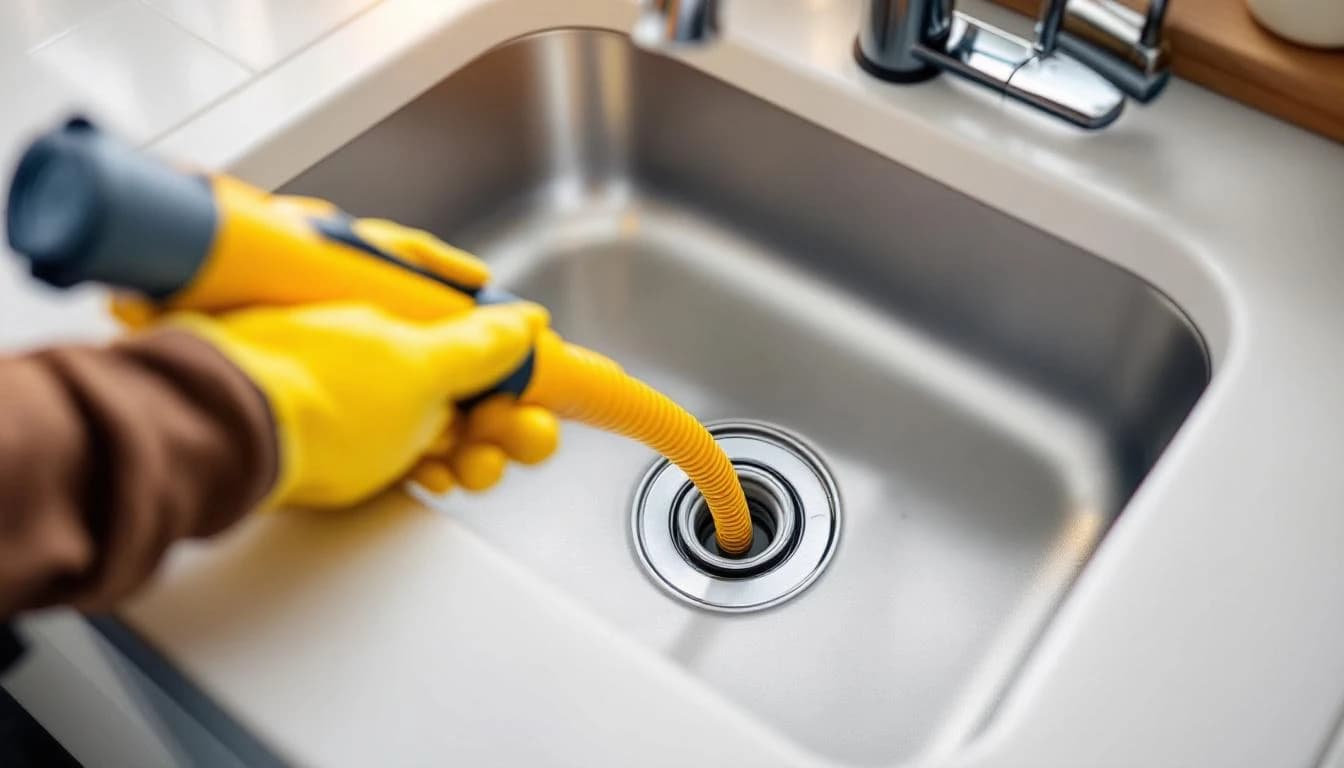
Most "how to unclog a drain" guides open with a chemical drain cleaner recommendation. That's backwards. Chemical cleaners are the last resort, not the first — they damage pipes, burn skin, and create toxic fumes when they splash or mix with other products.
90% of household drain clogs clear with physical methods in 10 minutes and $0. This guide walks through them in the order I'd use them myself, followed by safety rules for chemicals when nothing else works.
Critical safety rule, upfront: Per the CDC, "Do not mix household cleaners!" Combining bleach with ammonia, vinegar, or other drain cleaners creates chlorine and chloramine gases that cause severe lung tissue damage when inhaled. If you've already poured one chemical and it didn't work, don't pour another on top — flush thoroughly with water and wait 24 hours before trying something else.

Step 1: Identify Where the Clog Is
The location of the clog determines the fix. Run water and watch:
| Symptom | Likely location | First fix to try |
|---|---|---|
| One sink/tub/shower drains slowly | Within 12 inches of drain opening (hair, soap) | Drain snake or hair catcher |
| One sink completely blocked | In the P-trap under the sink | Unscrew P-trap and clean |
| Kitchen sink slow after washing greasy dishes | Grease buildup in the line | Hot water + dish soap, then snake |
| Multiple drains slow at the same time | Main line issue — beyond DIY | Call a plumber |
| Toilet specifically clogged | Bowl trap or further down | Toilet plunger (different shape than sink plunger) |
| Sewage smell or backup anywhere | Main line or vent stack | Call a plumber — don't touch |
If any of the "call a plumber" symptoms apply, stop here and make the call. Main line clogs cause sewer backups that damage floors and drywall and create biohazard cleanup.
For fixture-specific clogs (one sink, one tub, one toilet), continue.
Method 1: Hot Water and Dish Soap (5 Minutes, Kitchen Sinks)
If your kitchen sink drains slowly, especially after washing greasy dishes, try this first.
- Run hot tap water for 30 seconds to warm the pipe
- Pour 1-2 tablespoons of dish soap (Dawn or any grease-cutting detergent) directly down the drain
- Bring a gallon of water to a near-boil; let cool 30 seconds if you have PVC pipes (white plastic) — they warp above 160°F
- Pour the hot water down the drain slowly in 3-4 pours with 30 seconds between
- Test with cold water
According to the EPA, fats, oils, and grease (FOG) are a major cause of sewer blockages — soap and hot water help break them down without harsh chemicals.
Method 2: Plunger (5 Minutes, Any Fixture)
A plunger works on almost every fixture drain. Details matter:
- Use the right plunger. A cup plunger (flat-bottomed) is for sinks and tubs. A flange plunger (bell-shaped with a fold-out flange) is for toilets. They are not interchangeable.
- Cover the overflow hole (the small hole high on the side of the sink or tub) with a wet rag, duct tape, or your other hand. Otherwise, you're pushing air through the overflow instead of water through the clog.
- Fill the fixture with 2-3 inches of water. You plunge water, not air.
- Seal the plunger around the drain, then push-pull firmly 10-15 times. The pulling motion is as important as the pushing — it dislodges the clog.
- Lift the plunger off quickly to see if water drains.
If the clog moves, run hot water for 2 minutes to flush fully.
Method 3: Manual Hair Removal (5 Minutes, Bathroom Sinks and Tubs)
Bathroom clogs are 90% hair, and the hair is almost always within 6 inches of the drain opening.
For bathroom sinks with pop-up drain plugs:
- Most pop-ups are held on by a small rod under the sink (the "pivot rod"). Unscrew the small plastic nut holding it, pull out the rod.
- The pop-up now lifts straight out. A hair clog is usually attached to the bottom of the pop-up.
- Clean it with a paper towel, put it back.
For tubs and showers:
- Unscrew the strainer (usually a small screw in the middle) or pry it off.
- Use a plastic "hair snake" tool — those $3 flexible barbed strips at any hardware store. Insert, twist, pull back. It will come out with a depressing amount of hair attached.
- Run water to verify drain is clear.
Method 4: Baking Soda and Vinegar (10 Minutes, Light Clogs)
This is genuinely useful for slow drains with organic buildup — not dramatic like the internet suggests, but effective for light clogs.
- Remove standing water if any (bail with a cup)
- Pour 1/2 cup baking soda down the drain
- Follow with 1/2 cup white vinegar
- Cover the drain with a wet rag (forces reaction down, not up)
- Wait 10 minutes
- Flush with a gallon of hot (not boiling for PVC) water
The chemistry: baking soda (base) + vinegar (acid) produces CO2 gas and water. The fizz mechanically agitates organic material. It doesn't dissolve grease or hair directly, so it works for prevention and light clogs, not major blockages.
Don't combine this with commercial drain cleaners. Never pour anything else on top of a baking soda + vinegar drain — it's already doing chemistry.
Method 5: Drain Snake / Auger (15 Minutes, Stubborn Fixture Clogs)
When hair removal and plunging fail, a hand auger (drain snake) is the answer. A basic 25-foot hand auger costs $20-$30 at any hardware store and handles 90% of fixture-level clogs.
- Remove the drain strainer / stopper
- Feed the auger cable into the drain by hand until you feel resistance (the clog)
- Lock the cable handle in place, then crank the handle clockwise while gently pushing
- When the cable stops advancing, you've either pierced the clog or wrapped it on the cable head
- Pull the cable out slowly (hair and gunk come out with it — have a trash bag ready)
- Run hot water for 2 minutes to flush
Repeat once if the drain is still slow. If two auger passes don't resolve it, the clog is either deeper than the auger reaches or cemented in place — time to call a pro or pull the P-trap.
Method 6: Remove the P-Trap (30 Minutes, Under-Sink Clogs)
The P-trap is the U-shaped pipe under every sink. Clogs stall here frequently — food scraps, lost jewelry, small kids' toys.
You will need: a bucket, channel-lock pliers, old towels, gloves.
- Put the bucket under the P-trap. It's full of water.
- Use channel locks (or your hands on modern plastic traps) to loosen the two slip nuts holding the P-trap — one on each end.
- Remove the trap. Empty it into the bucket.
- Check for the clog inside the trap. Clean with a bottle brush or a bent wire.
- Also check the pipe stub going into the wall — if there's a clog beyond the trap, you may need an auger fed through the wall pipe.
- Reassemble by hand-tightening the slip nuts (do not use pliers for final tightening — plastic threads strip easily).
- Run water and check for leaks before walking away.
Plastic traps strip easily. Hand-tight is enough; a quarter turn with channel locks if it's leaking.
Method 7: Chemical Drain Cleaners (LAST RESORT — READ CAREFULLY)
Only use chemical drain cleaners if:
- You've tried physical methods and they failed
- You can't access the pipe to auger it
- You can safely wait 15-30 minutes for the product to work without using the fixture
- You have gloves and eye protection
Read this section fully before opening any drain cleaner.
The three types of drain cleaner
| Type | Active ingredient | Use on | Warning |
|---|---|---|---|
| Caustic (Drano, Liquid-Plumr) | Sodium hydroxide (lye) | Grease, soap, organic | Burns skin, eyes. PVC-safe if used to instructions. |
| Oxidizing | Sodium hypochlorite (bleach) or peroxide | Hair, organic | Cannot be mixed with anything else — creates toxic gases. |
| Acidic (commercial/pro) | Sulfuric or hydrochloric acid | Stubborn grease | Extremely corrosive. NOT for DIYers. Pros only. |
Safety rules (non-negotiable)
- Read the label first, every time. Different products have different instructions.
- Never mix two different drain cleaners. Per the CDC, mixing bleach with vinegar, ammonia, or other cleaners "can generate chlorine and chloramine gases that might result in severe lung tissue damage when inhaled."
- Never pour a second chemical on top of a first that didn't work. Flush with cold water and wait 24 hours.
- Wear gloves and safety glasses. The NIOSH Pocket Guide lists sodium hydroxide (the active ingredient in caustic drain cleaners) as causing eye and skin burns on contact and requiring skin/eye protection.
- Ventilate the room. Open a window and run a fan.
- Never plunge after using a chemical cleaner. Splash-back into the face is a severe injury risk.
- If the product touches your skin, flush with water immediately for 15+ minutes. If it contacts your eyes, flush for 15 minutes and seek medical care.
- Keep children and pets out of the area during and for 30 minutes after use.
If your clog resists one round of the right chemical cleaner, stop. Call a plumber. Repeated chemical applications damage pipes, create splash hazards, and don't dissolve clogs that weren't going to dissolve.
Pro Tips to Prevent Future Clogs
- Never pour grease or cooking oil down the drain. Scrape it into the trash; run disposal with cold water + dish soap for traces. The EPA explicitly calls out FOG as a sewer blockage material.
- Install hair catchers on every tub, shower, and bathroom sink. $4 each. They catch 80% of the hair that would otherwise reach the P-trap.
- Flush ONLY toilet paper down toilets. "Flushable" wipes are not. The EPA names "flushable" baby and facial wipes as inappropriate materials that cause blockages — the scare quotes are theirs.
- Run hot water + dish soap down the kitchen sink once a week. Preventive grease dissolver.
- Coffee grounds go in the trash, not the drain. They clump and are a top cause of kitchen sink clogs.
Common Mistakes
- Jumping to chemicals first. Plunger, hair removal, or an auger fixes 90%+ of clogs cheaper and safer.
- Mixing chemicals. The single most dangerous thing you can do while unclogging a drain. Don't.
- Pouring boiling water on PVC. Warps pipes and joints. Use hot tap water or cooled near-boil water instead.
- Not covering the overflow during plunging. You're just moving air around. Seal it first.
- Using a toilet plunger on sinks or vice versa. Different shapes for different fixtures.
Cost Reality Check
| Approach | DIY cost | Handyman | Plumber |
|---|---|---|---|
| Prevention (hair catchers, habits) | $10 | — | — |
| Hair snake / plunger / baking soda | $0–$10 | — | — |
| Drain auger (hand, DIY) | $20–$30 | — | — |
| Professional fixture clog | — | $75–$200 | $150–$300 |
| Main line clog (sewer camera + auger) | Pro only | — | $300–$800 |
| Hydro-jetting (major clog) | Pro only | — | $400–$1,000 |
Pro pricing from HomeAdvisor drain cleaning cost guide and Fixr, 2025 averages. Emergency weekend calls run 40-70% higher.
When to Stop DIY and Call a Plumber
Call immediately if:
- Multiple drains are slow at the same time (main line issue)
- Sewage backs up anywhere in the house
- Rotten-egg or sewage smell persists
- Basement floor drain is the one clogged (almost always main line)
- You've tried a plunger and auger without success
- You see water coming up through the bathtub drain when you flush the toilet (main line)
- The clog is in a pipe that's inside a wall (accessed through a cleanout)
None of that applies? One of the six physical methods above probably fixes your drain in under an hour.
Something applies? Find a handyman near you for simple fixture clogs, or go straight to a plumber for main line work — the price difference (handyman $100, plumber $300) is worth it only if you're confident the clog is fixture-level.
One Last Thing
The drain-cleaning aisle of every hardware store is a wall of brightly colored warning labels for a reason — these are genuinely hazardous products, marketed in a way that suggests they're as casual as dish soap. They aren't. But 90% of drain clogs don't need them at all. A $3 plastic hair snake, a $20 drain auger, and 15 minutes will fix nearly any single-fixture clog.
If your drain is serious — main line, sewage backup, multi-fixture — stop DIY immediately. Water damage from a neglected sewer backup can cost tens of thousands. Find a handyman →
Frequently Asked Questions
Should I use a chemical drain cleaner?
Chemical drain cleaners should be your LAST resort for household clogs, not your first. They work by dissolving organic material — including the seals in your pipes, plastic traps, and certain metal fittings over time. They also create toxic fumes, burn skin and eyes on contact, and can splash back up the drain if the clog is solid. Try physical methods first: plunger, boiling water, baking soda + vinegar, then a drain snake. Reserve chemicals for situations where these fail and you can't get to the pipe. If you do use them, wear gloves and eye protection and follow the exact instructions — and NEVER mix different drain cleaners.
What does the baking soda and vinegar trick actually do?
Baking soda (sodium bicarbonate) and vinegar (acetic acid) react to create carbon dioxide gas and water. The fizzing action can break up light hair, soap scum, and grease clogs by mechanical agitation — not by dissolving them chemically. It works for minor slow drains but won't clear anything serious. Recipe: pour 1/2 cup baking soda down the drain, follow with 1/2 cup vinegar, cover with a wet rag for 10 minutes, flush with hot (not boiling, for PVC) water. Repeat if it half-works.
Why can't I use boiling water on PVC pipes?
PVC (white plastic) pipes are rated for 140°F continuous / 160°F intermittent. Water boils at 212°F. Pouring boiling water directly down a PVC drain can soften the pipe, warp joints, and cause leaks — especially on older or cheaper PVC. Use hot tap water (around 120°F) or bring water to a near-boil and let it cool 30 seconds before pouring. For older homes with metal drain pipes, boiling water is fine.
My drain is slow but not completely clogged — what's the right fix?
Slow drains are almost always partial blockages of hair, soap, and grease, usually within 6-12 inches of the drain opening. Start with manual removal: (1) take off the drain stopper/strainer and pull out any visible hair; (2) for bathroom sinks and tubs, a flexible drain hair snake ($3-$8) catches most clogs within 30 seconds; (3) for kitchen sinks, boiling water (with metal pipes) or a plunger usually resolves it. Save chemicals for last.
When should I stop DIY and call a plumber?
Call a plumber if: (1) multiple drains are slow at the same time (you have a main line issue, not a fixture issue); (2) sewage is backing up anywhere in the house; (3) you smell rotten eggs or sewage gas; (4) you've tried physical methods and one round of chemical cleaner without success; (5) the drain hasn't worked properly in multiple attempts over weeks; (6) the clog is in a basement floor drain (often main line). A main line clog that goes untreated can back up into your house and cause thousands of dollars of water damage. A [handyman](/handyman-services) can handle simple fixture clogs; a plumber with a mechanical auger handles main lines and serious clogs.
How much does a plumber charge to unclog a drain?
A plumber typically charges $150-$400 to unclog a drain, reflecting a minimum service call plus drain auger work. For main sewer line clogs requiring camera inspection or hydro-jetting, expect $300-$800. A handyman charges $75-$200 for simple fixture clogs (sink, tub, toilet) but usually won't touch main line work. Before calling, try the DIY methods in this guide — plunger, snake, baking soda — which resolve most kitchen and bathroom clogs.
Your skills deserve to be seen.
Join handymen who use HandymanCan to get found by local clients — completely free.
No credit card. No catch. Takes 5 minutes.
Related Articles
How to Patch a Hole in Drywall: Small, Medium, and Fist-Sized Fixes
Patch any drywall hole — from nail pops to a doorknob-sized crater — in under 2 hours. The right method for each hole size, the tools that matter, and how to make the patch invisible after paint.
How to Install Laminate Flooring: A Realistic Weekend DIY Guide
Install laminate flooring yourself in 1-2 days for a 200 sq ft room. Subfloor prep, underlayment, click-lock planking, expansion gaps, and trim reinstall — plus what to check before you buy for indoor air safety.
How to Fix a Running Toilet: Diagnose and Repair in 20 Minutes
Stop a running or ghost-flushing toilet in under 20 minutes. Diagnose the flapper, fill valve, or float issue, buy the right $5-$20 part, and fix it yourself.