
Handyman Bond vs Insurance: What's the Difference? (2026)
Bonded vs insured — what's the difference for handymen? A bond protects your customer; insurance protects you. See what each covers, real 2026 costs, and which one you actually need.
"Bonded and insured." You've seen it on every competitor's truck and website. Most handymen put it on their own marketing without fully knowing what it means — or which of the two actually protects them.
Here's the part that surprises people: a bond doesn't protect you at all. It protects your customer. And the difference between the two isn't marketing fluff — it changes who pays when a job goes sideways.
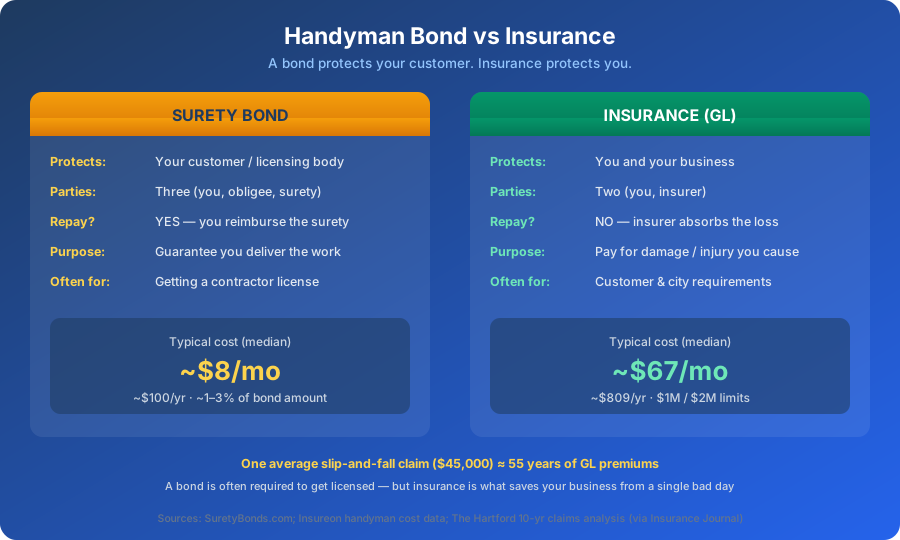
A surety bond protects your customer and must be repaid if a claim is paid. Insurance protects your business and is not repaid. They solve different problems — many handymen need both.
The One-Sentence Difference
If you remember nothing else, remember this:
A surety bond protects your customer. Insurance protects you.
That single distinction explains everything else. According to SuretyBonds.com, with insurance, the insurer pays a covered loss and does not seek repayment from you. With a surety bond, the surety may pay a valid claim — but you, the bonded party, must reimburse the surety in full.
A bond isn't really insurance for you. It's a financial guarantee to someone else, backed by your promise to pay the money back.
How a Surety Bond Works
A surety bond is a three-party agreement:
| Party | Role |
|---|---|
| Principal | You, the handyman who buys the bond |
| Obligee | The party protected — usually your customer or the city/state licensing authority |
| Surety | The bond company that backs the guarantee |
Here's the flow. You buy a bond (the premium is your cost). If you fail to complete contracted work, breach the agreement, or violate the licensing terms the bond covers, the obligee can file a claim. The surety investigates, and if the claim is valid, the surety pays the customer. Then the surety comes to you to recover every dollar it paid out.
So the bond makes your customer whole quickly — but it does not absorb the loss. You do.
This is why bonds are so common as a licensing requirement. Cities and states that license contractors often require a license bond so that consumers have a guaranteed source of recovery if a licensed pro disappears or does shoddy work. It's consumer protection, baked into the license.
How Insurance Works
Insurance is a two-party agreement — just you and the insurer. The coverage most relevant to handymen is general liability (GL), which covers third-party bodily injury and property damage you cause on the job. If a customer trips over your tools, or you put a drill through a water line and flood a kitchen, your GL policy responds. Per Insureon, GL covers third-party injury, third-party property damage, legal defense costs, and personal/advertising injury.
The critical difference: when your insurer pays a covered claim, it does not bill you back. That's the whole point of insurance — you pay a predictable premium so the carrier absorbs the unpredictable, expensive loss.
A bond pays your customer and sends you the bill. Insurance pays the claim and eats the cost. That's the entire difference in one line.
Your skills deserve to be seen.
Join handymen who use HandymanCan to get found by local clients — completely free.
No credit card. No catch. Takes 5 minutes.
Side by Side
| Surety Bond | Insurance (General Liability) | |
|---|---|---|
| Who it protects | Your customer / licensing authority | You and your business |
| Parties | Three (you, obligee, surety) | Two (you, insurer) |
| Do you repay claims? | Yes — you reimburse the surety | No — the insurer absorbs the loss |
| Main purpose | Guarantee you'll deliver / meet license terms | Pay for damage or injury you cause |
| Often required for | Getting a contractor license | Getting licensed in many cities; customer/GC requirements |
| Typical cost | ~$8/mo · ~$100/yr (median) | ~$67/mo · ~$809/yr (median) |
Cost figures: bond and GL medians from Insureon's handyman cost data.
What Each One Costs
The good news: a bond is cheap. The protection that actually matters for your finances — insurance — costs more, and it's worth every dollar.
Surety bond. Insureon reports a median handyman surety bond cost of about $8/month, or $100/year. The pricing rule of thumb, per Lance Surety Bonds, is that a license bond premium runs roughly 1% to 3% of the bond's face amount for applicants with good credit. So a $10,000–$15,000 bond often costs in the neighborhood of $100–$450 a year. If your credit is rough, expect 5% to 15%. (Treat the dollar examples as illustrative — your exact premium depends on the bond amount your jurisdiction requires and your credit.)
General liability insurance. Insureon's median handyman GL premium is about $67/month, or $809/year, for a typical $1M-per-occurrence / $2M-aggregate policy. That "$1M/$2M" means the insurer pays up to $1 million for any single claim and up to $2 million for all claims in the policy year.
The contrast tells the story: the bond costs about a tenth of what GL does, because the bond doesn't actually take on your risk — you do. Insurance costs more because it genuinely absorbs the loss.
For a full breakdown of GL, BOP, workers' comp, and the rest of the coverage stack — with state-by-state pricing — see our complete handyman insurance guide.
Why Insurance Is the One That Saves Your Business
A bond is often required to get licensed. But insurance is what keeps one bad day from ending your business.
Consider the claim data. The Hartford's ten-year analysis of small-business claims (reported by Insurance Journal) found the average slip-and-fall / customer injury claim reached $45,000 in 2025 — up from $20,000 a decade earlier. Water and freezing damage averaged about $35,000. A fire claim averaged $80,000.
Now do the math. A handyman's median GL premium is about $809 a year. One average slip-and-fall claim is roughly 55 times that annual premium. Without GL insurance, that $45,000 comes out of your own pocket — and a bond does nothing to help, because a bond isn't there to protect you.
A single average injury claim ($45,000) equals about 55 years of GL premiums. That's the math that ends uninsured handyman businesses.
When You Need a Bond, Insurance, or Both
It's not either/or. Here's how to think about it:
- Get a bond when your license requires it. Many cities and states that license contractors require a license bond before they'll issue the license. If yours does, you need the bond — and having insurance won't satisfy that requirement. Check your state and city rules in our handyman license guide.
- Get general liability insurance regardless. Whether or not it's legally required, GL is the coverage that protects your finances. Customers and general contractors increasingly ask for proof of it before they'll hire you.
- Add workers' comp once you hire. If you bring on even one employee, workers' compensation becomes legally required in nearly every state.
- Get both when you're licensing up. A handyman going from minor exempt work to a full contractor license typically needs the bond (to get licensed) and the insurance (to protect the business and win bigger jobs).
One real provider option: NEXT Insurance publishes handyman general liability ranges of roughly $36–$73/month, with coverage starting around $50/month, and offers a fast online quote. It's a practical place to compare a GL quote against the medians above.
Get covered — $40–$80/mo for $1M coverage
Free quote · about 2 minutes · same-day proof of insurance · no obligation
"Bonded and Insured" — Now You Can Say It Honestly
When you put "bonded and insured" on your truck or your HandymanCan profile, here's what you're actually telling a customer:
- Bonded — "If I don't deliver the work we agreed on, you have a guaranteed way to be compensated."
- Insured — "If I damage your home or someone gets hurt, my insurance covers it — not your homeowner's policy, and not your wallet."
That's a powerful trust signal, and it's a real differentiator in a field where plenty of handymen carry neither. Customers who are choosing between you and a cheaper unbonded, uninsured competitor are choosing peace of mind. Make sure your profile and reviews say it clearly.
The Bottom Line
A bond and insurance aren't two versions of the same thing. A bond protects your customer and must be repaid if it pays out — it's usually a licensing requirement. Insurance protects you and absorbs the loss — it's what stands between a single accident and the end of your business.
Get the bond your license demands. Get the general liability insurance your business can't survive without. And when you advertise "bonded and insured," you'll actually know what you're promising.
This article contains affiliate links. If you buy a policy through them we may earn a small referral fee, at no extra cost to you — it never changes what you pay. Cost figures are medians and ranges from the sources listed below; your actual price depends on your location, coverage limits, and history.
Sources
- SuretyBonds.com — Bonds vs. Insurance — The core distinction: who each protects and the reimbursement difference
- Insureon — Handyman Insurance Cost — Median handyman costs for surety bonds, general liability, and other coverage
- Insureon — General Liability Cost & Coverage — What general liability insurance covers
- Lance Surety Bonds — Surety Bond Cost — The 1%–3%-of-bond-amount premium rule
- Insurance Journal — The Hartford 10-Year Claims Analysis — Average claim costs, including the $45,000 slip-and-fall figure
- NEXT Insurance — Handyman Insurance Cost — A real provider's published handyman general liability ranges
Frequently Asked Questions
What is the difference between a handyman bond and insurance?
A surety bond protects your customer; insurance protects you. With insurance, the insurer pays a covered loss and does not ask you to repay it. With a surety bond, the surety company may pay a valid claim to your customer, but you — the bonded party — must reimburse the surety in full. A bond is a three-party agreement between you, the customer or licensing authority, and the surety. Insurance is a two-party agreement between you and the insurer.
Does a handyman need to be bonded and insured?
It depends on your location and whether you're licensed. Many cities and states require a license bond as a condition of holding a contractor license, and many cities require general liability insurance too. Even where neither is legally required, general liability insurance is strongly recommended because it protects your own business from costly claims. A bond is often required to get licensed; insurance is what actually shields your finances.
How much does a handyman bond cost?
A surety bond is inexpensive. Insureon reports a median handyman surety bond cost of about $8 per month, or $100 per year. As a rule of thumb, a license bond premium runs roughly 1% to 3% of the bond's face amount for applicants with good credit — so a $10,000 to $15,000 bond often costs around $100 to $450 per year. Poor credit can push the rate to 5% to 15%.
What does 'bonded and insured' actually mean?
'Bonded' means you've purchased a surety bond that guarantees your customer can be compensated if you fail to complete work or breach the contract — but you repay the surety for any claim it pays. 'Insured' means you carry insurance, usually general liability, that pays for damage or injury you cause, without you repaying the insurer. Together they signal that a customer is protected if the job goes wrong and that your business can absorb a covered loss.
Does a bond protect the handyman?
No — a surety bond protects the customer and the licensing authority, not the handyman. If the surety pays a claim against your bond, you are required to repay that amount in full, plus any costs. To protect your own business from lawsuits and damage claims, you need insurance, specifically general liability coverage, not a bond.
Do I need a bond if I already have insurance?
Possibly, because they serve different purposes. Insurance protects you from claims of property damage or injury. A bond protects your customer if you don't deliver the work as agreed, and it's often a licensing requirement in cities and states that license contractors. If your jurisdiction requires a license bond, having insurance does not satisfy that requirement — you need both.
Your skills deserve to be seen.
Join handymen who use HandymanCan to get found by local clients — completely free.
No credit card. No catch. Takes 5 minutes.
Related Articles

Can a Handyman Do Electrical Work? State-by-State Rules (2026)
Can a handyman legally do electrical work? In most states, paid electrical work needs a licensed electrician. See the rules for TX, CA, FL, AZ, GA, NC, IL & NY — plus what's actually 'minor.'

Arizona Handyman License: The $1,000 Exemption Rule (2026 Guide)
Arizona's handyman exemption lets you work without a contractor license under $1,000 per job (A.R.S. § 32-1121). See the exact rules, the required ad disclosure, penalties, and how to get an AZ ROC license.

Colorado Handyman License: No State License, City Rules Apply (2026)
Colorado has no statewide handyman or general contractor license — licensing is city-by-city, but electrical and plumbing are licensed statewide. See rules and costs for Denver, Colorado Springs, Aurora, Fort Collins & Boulder.