
Can a Handyman Do Electrical Work? State-by-State Rules (2026)
Can a handyman legally do electrical work? In most states, paid electrical work needs a licensed electrician. See the rules for TX, CA, FL, AZ, GA, NC, IL & NY — plus what's actually 'minor.'

"Can you just swap this outlet while you're here?"
Every handyman hears it. The honest answer for most of the country is: not legally, not for pay, not without an electrician's license. Electrical is the one trade where the usual "minor work" exemptions almost always run out — and where getting it wrong risks a fine, a voided insurance claim, or a house fire.
Here's exactly what the rules say, state by state, and where the real line sits between a five-minute favor and licensed electrical contracting.
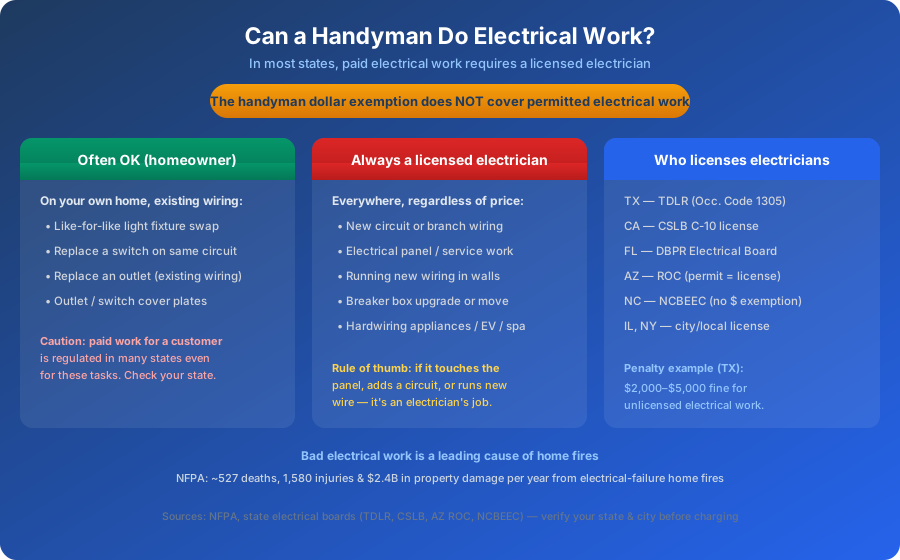
In most states, electrical work is a separately licensed trade — the handyman exemption that covers minor jobs usually does not extend to electrical, because electrical work typically needs a permit.
The General Rule: Electrical Is Almost Always Licensed
Across the United States, electrical work is regulated at the state or local level, not federally. There is no national electrician's license. Instead, each state names its own authority — the Texas Department of Licensing and Regulation, California's Contractors State License Board, North Carolina's Board of Examiners of Electrical Contractors, and so on. A few places, like Illinois and parts of New York, hand electrician licensing entirely to cities.
What is national is the safety standard. The National Electrical Code (NFPA 70) sets minimum requirements "for the practical safeguarding of persons and property from hazards arising from the use of electricity," and some edition of it is adopted across all 50 states. But here's the distinction that trips up a lot of handymen:
The NEC tells you how electrical work must be done. State and local licensing law tells you who is legally allowed to do it for pay. Meeting code is not the same as being allowed to charge for the work.
For most states, the two questions land in the same place: performing electrical work on someone else's property for compensation requires a licensed electrician or electrical contractor.
Why the "Handyman Exemption" Doesn't Save You
Many states let an unlicensed handyman take on minor jobs under a dollar threshold — California's is $1,000, Arizona's is $1,000. So why doesn't that cover a quick outlet swap?
Two reasons, and usually both apply:
- Permits. Those minor-work exemptions almost always exclude any job that requires a building permit. Most electrical work requires a permit — so it falls outside the exemption automatically, even if it's a $40 job.
- Separate trade. Electrical is frequently carved out as its own licensed trade, regulated independently of the general handyman/contractor rules.
So the dollar threshold that lets you legally patch drywall or hang a TV almost never lets you wire anything.
Your skills deserve to be seen.
Join handymen who use HandymanCan to get found by local clients — completely free.
No credit card. No catch. Takes 5 minutes.
What Counts as "Minor" vs. Licensed Electrical Work
This is genuinely state-specific, so be careful — but there's a reliable pattern.
Often allowed (for the homeowner, on their own home): swapping a like-for-like light fixture, switch, or outlet on existing wiring. Many states give homeowners a personal exemption to work on their own residence.
Usually regulated when a handyman does it for a customer: that same device or fixture work. The key shift is paid work for the public. Texas, for example, defines "electrical work" broadly as any labor or material used in installing, maintaining, or extending an electrical wiring system — and its exemptions cover categories of people and contexts (homeowners, certain in-house maintenance staff), not "small jobs."
Requires a licensed electrician and a permit, virtually everywhere:
- Adding a new circuit or branch wiring
- Any work on the electrical panel or service entrance
- Running new wiring through walls
- Upgrading or moving a breaker box
- Hardwiring appliances, EV chargers, or hot tubs
A safe rule of thumb: if it touches the panel, adds a circuit, or runs new wire, it's a licensed electrician's job no matter what state you're in.
State-by-State: Can a Handyman Do Electrical Work?
The table below is built from each state's own licensing authority. Where a rule couldn't be confirmed to a primary source, it's left out rather than guessed.
| State | Licensed by | Can a handyman do paid electrical work? |
|---|---|---|
| Texas | TDLR (Occupations Code Ch. 1305) | No — non-exempt work must go through a licensed electrical contractor; "minor" isn't an exemption |
| California | CSLB (C-10 license) | No for permit-required or $1,000+ work — the handyman exemption excludes permitted jobs |
| Florida | DBPR Electrical Contractors' Board | No — must be a certified or registered electrical contractor |
| Arizona | AZ ROC (A.R.S. § 32-1121) | No for permit-required work — the $1,000 exemption doesn't cover it |
| Georgia | GA Secretary of State Board of Electrical Contractors | No — electrical contracting requires a state license |
| North Carolina | NCBEEC (G.S. 87-43) | No — the licensing statute has no small-job dollar exemption |
| Illinois | Municipal (e.g., City of Chicago) — no statewide license | Depends on the city; most require a local electrical contractor license |
| New York | City/county (e.g., NYC DOB) | No in NYC — a licensed Master or Special Electrician plus a permit is required |
A few worth calling out:
- Texas publishes a critical caveat: even where a state exemption seems to apply, "municipal or regional regulations may override these exemptions." Your city can be stricter than the state.
- California's $1,000 handyman exemption was raised from $500 in 2025, but it still doesn't reach permitted electrical work. See our California handyman license guide for the full $1,000 rule.
- North Carolina's electrical contracting statute (G.S. 87-43) contains no dollar threshold — the licensing requirement applies regardless of how small the job is.
- Illinois and New York have no statewide electrician license; the rules live in the city code, so a Chicago job and a downstate job can follow different requirements.
Penalties: What Unlicensed Electrical Work Costs
The legal risk is concrete, and it's separate from the safety risk.
| State | Penalty for unlicensed electrical work |
|---|---|
| Texas | A violation carrying a $2,000–$5,000 fine, plus possible suspension up to revocation (TDLR sanctions) |
| California | Unlicensed contracting is a misdemeanor under B&P Code § 7028 |
| Arizona | Unlicensed contracting is prosecutable under the consumer-fraud statute referenced in A.R.S. § 32-1121 |
These are the figures that could be confirmed to a state source. Other states impose their own fines and, in repeat cases, escalating charges — check your state board before assuming the penalty is small.
Your skills deserve to be seen.
Join handymen who use HandymanCan to get found by local clients — completely free.
No credit card. No catch. Takes 5 minutes.
The Risk That Isn't on Any License Page
Even if you never get caught by a licensing board, bad electrical work has a way of catching up with you.
The numbers are sobering. Home structure fires involving electrical failure or malfunction cause an estimated annual average of 527 civilian deaths, 1,580 injuries, and $2.4 billion in direct property damage, according to NFPA research. Faulty or inadequate wiring is a leading cause.
One slip on an electrical job isn't a callback — it's potentially a house fire, a denied insurance claim, and a liability lawsuit with your name on it.
When you do electrical work you're not licensed for, you're usually doing it without a permit and without inspection. If that work later contributes to a fire or injury, the homeowner's insurer may have grounds to deny the claim, and your own general liability coverage may not respond to work outside your licensed scope. The economics never favor the shortcut. (For a breakdown of what coverage actually protects you, see our handyman insurance guide.)
What a Smart Handyman Does Instead
You don't have to turn the customer away empty-handed. The pros who build durable businesses handle the electrical question like this:
-
Know your "always say no" list. New circuits, panel work, new wiring, hardwired appliances — those go to a licensed electrician, full stop, in every state.
-
Check before you charge for device swaps. A like-for-like switch or outlet on existing wiring is a gray area that depends entirely on your state and city. Call your state electrical board and your local building department before you make it a paid service.
-
Build a referral partnership with a licensed electrician. When a customer needs real electrical work, hand it off to someone you trust. You keep the relationship, the customer gets it done legally, and the electrician sends general work back your way. It's the cheapest marketing you'll ever do.
-
Consider getting licensed if electrical is a big share of your requests. If you're constantly turning down wiring jobs, the residential wireman or journeyman path may pay for itself. License types and routes vary by state — start with our state-by-state handyman license guide.
-
Make yourself easy to find and trust. When you do refer electrical work out, the customer remembers the handyman who was honest about scope. A professional HandymanCan profile with your services, photos, and reviews turns that trust into repeat calls for everything you can legally do.
The Bottom Line
In the large majority of states, a handyman cannot legally do electrical work for pay without an electrician's license. The minor-work exemptions that cover painting and drywall almost never reach electrical, because electrical work usually needs a permit and is regulated as its own trade. The exact rule depends on your state — and sometimes your city — so verify with your state electrical board before you charge for anything that touches wiring.
Knowing where that line is doesn't cost you jobs. It protects your business, keeps your customers safe, and makes you the pro people trust enough to call again.
Sources
- NFPA 70 — National Electrical Code — The national safety standard for electrical installation, adopted across all 50 states
- NFPA — Home Fires Caused by Electrical Failure or Malfunction — Annual death, injury, and property-damage statistics
- Texas Occupations Code Chapter 1305 — The Texas Electrical Safety and Licensing Act
- TDLR Electricians Compliance Guide — Texas definition of "electrical work" and licensing scope, including the municipal-override note
- TDLR Electrical Sanctions — Texas penalties ($2,000–$5,000) for unlicensed electrical work
- CSLB C-10 Electrical Classification — California electrical contractor license scope
- Arizona A.R.S. § 32-1121 — Arizona's handyman exemption and its exclusions
- North Carolina G.S. 87-43 — NC electrical contracting definition and license requirement
- NYC DOB — Master & Special Electricians — New York City electrician licensing
Frequently Asked Questions
Can a handyman do electrical work?
In most states, no — not for pay. Electrical work is a separately licensed trade in almost every state, and the 'handyman exemption' that allows minor unlicensed work usually does not cover electrical, because electrical work typically requires a permit and permitted work is excluded from those exemptions. A homeowner can often do minor electrical work on their own home, but a handyman doing that same work for a paying customer is usually performing regulated electrical work that requires a licensed electrician.
Can a handyman replace a light switch or outlet?
It depends on the state and whether it's paid work. A homeowner replacing a switch or outlet on existing wiring in their own home is often allowed. But when a handyman does it for a customer, many states treat any installation, maintenance, or alteration of wiring and devices as licensed electrical work. Texas, for example, defines electrical work broadly enough to include device and fixture work for the public. Always check your state's electrical board and your city's rules before charging for it.
Can a handyman do electrical work in Texas?
No, not for the public without a license. The Texas Department of Licensing and Regulation (TDLR) defines electrical work broadly under Occupations Code Chapter 1305, and exemptions apply to categories of people and contexts (homeowners on their own residence, certain maintenance staff) rather than to 'small jobs.' Performing or offering electrical work without the proper license is a violation with fines of $2,000 to $5,000.
Can a handyman do electrical work in California?
Generally no. California's handyman exemption (raised to $1,000 in 2025) does not apply when a job requires a building permit — and most electrical work requires a permit. Electrical contracting requires a C-10 license from the CSLB, and individual electricians working for C-10 contractors need state electrician certification.
What electrical work can a handyman legally do?
Very little for pay in most states. Truly minor tasks like swapping a like-for-like light fixture, switch, or outlet on existing wiring are sometimes allowed, but rules vary widely and many states regulate even these when done for compensation. Adding a new circuit, working on the electrical panel or service, or running new wiring virtually always requires a licensed electrician and a permit, everywhere.
What happens if you do electrical work without a license?
Penalties vary by state but are real. In Texas, unlicensed electrical work is a violation carrying a $2,000 to $5,000 fine. In California, unlicensed contracting is a misdemeanor. Beyond legal penalties, unpermitted and uninspected electrical work that doesn't meet code creates a serious fire risk and can give a homeowner's insurer grounds to deny a claim after a fire or loss.
Is there a handyman electrical license?
No. There is no special 'handyman electrical license.' To do electrical work for pay you generally need a recognized electrician or electrical contractor license — such as a residential wireman, journeyman, or master electrician, or a contractor classification like California's C-10. The path and authority differ by state: Texas uses TDLR, California uses the CSLB, North Carolina uses the NCBEEC, and states like Illinois and New York license electricians at the city level.
Your skills deserve to be seen.
Join handymen who use HandymanCan to get found by local clients — completely free.
No credit card. No catch. Takes 5 minutes.
Related Articles

Handyman Bond vs Insurance: What's the Difference? (2026)
Bonded vs insured — what's the difference for handymen? A bond protects your customer; insurance protects you. See what each covers, real 2026 costs, and which one you actually need.

Arizona Handyman License: The $1,000 Exemption Rule (2026 Guide)
Arizona's handyman exemption lets you work without a contractor license under $1,000 per job (A.R.S. § 32-1121). See the exact rules, the required ad disclosure, penalties, and how to get an AZ ROC license.

Colorado Handyman License: No State License, City Rules Apply (2026)
Colorado has no statewide handyman or general contractor license — licensing is city-by-city, but electrical and plumbing are licensed statewide. See rules and costs for Denver, Colorado Springs, Aurora, Fort Collins & Boulder.